Thymalin
Thymalin is usually discussed around thymus-related immune signaling and aging-biology discussions. This category covers signaling systems that can touch the brain and immune response. It can also touch skin or pigment pathways, vascular tone, sleep rhythm, or stress communication depending on the compound.
What that means in the body
Signaling peptides often work like messengers. They do not fit neatly into one body part. The nervous system and immune system constantly communicate. Skin, gut, and blood-vessel signals can be part of that same conversation.
That is why Thymalin should be read through context. The important question is which signaling lane it belongs to and what researchers are usually trying to model with it.
Why people are interested in it
People are usually interested in Thymalin because it connects to a specific signaling conversation rather than a simple category. Depending on the compound, that may involve sleep or stress response. It may also involve immune balance and pigmentation. Vascular tone, cosmetic research, or neuroprotective pathways may also come up.
This category benefits from slower explanation. A peptide can be popular because of one headline topic, but the more useful reading is how that topic connects to the body’s communication systems.
Purpose and potential benefits
For Thymalin, the purpose-and-benefit conversation is about communication between systems. Readers are usually trying to understand what signal is being studied and why that signal might matter in a broader body-system context.
The potential benefit discussion depends on the pathway. Some compounds are discussed around calm, sleep, or cognitive signaling. Others are closer to immune communication, pigment response, vascular signaling, or skin/cosmetic research.
When someone is reviewing product details for Thymalin, the specific signaling lane matters. The broad peptide label is not enough by itself because this category can include very different body-system conversations.
That extra context helps the reader separate neuropeptide and immune topics. It also keeps thymic and melanocortin topics separate. Vascular, sleep, and cosmetic-signaling topics do not need to be forced into one generic explanation.
How the pathway is usually explained
These pathways are usually explained through receptor activity and messenger signaling. Depending on the compound, immune-neuro communication and vascular tone may come up. Melanocortin pathways, thymic signaling, or neuropeptide regulation may also matter.
Thymalin is about how one signal changes the conversation between systems. The more clearly that signal is described, the easier it is to compare it with related peptides.
Related product
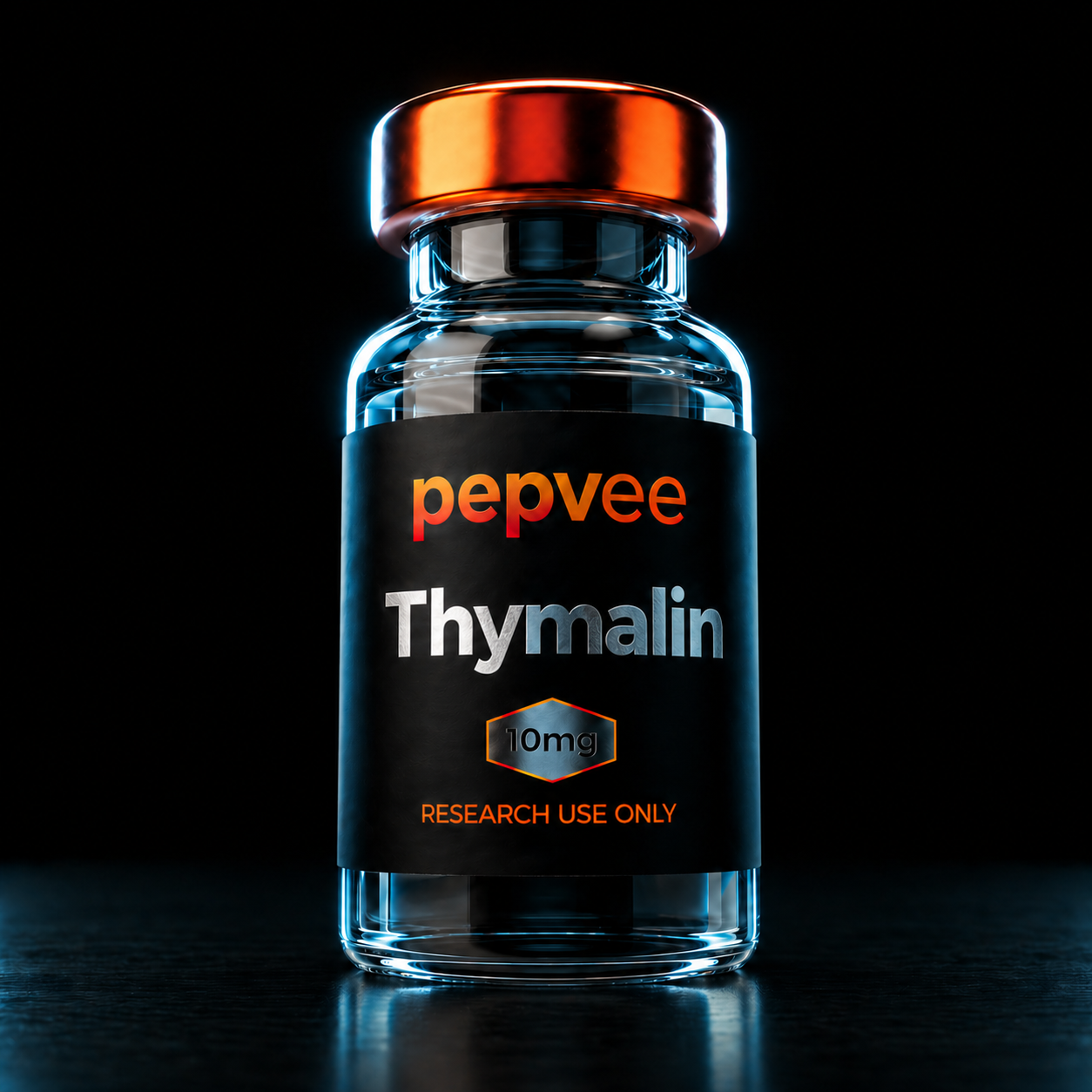
View product details, testing documents, and current availability on PepVee.
Neuro / Immune / Skin Research
PT-141 / Bremelanotide
melanocortin receptor research and central signaling literature.
Melanotan 2 / MT-II
melanocortin receptor research and pigmentation-pathway models.
VIP-10 / Vasoactive Intestinal Peptide
vasoactive intestinal peptide research involving immune, gut, and airway signaling models.
Snap-8
acetyl octapeptide cosmetic/skin-model research involving expression-line appearance markers.
DSIP / Delta Sleep-Inducing Peptide
sleep-related peptide literature and neuroendocrine signaling models.
Semax
neuropeptide research involving stress-response, cognition-related markers, and neuroimmune signaling.