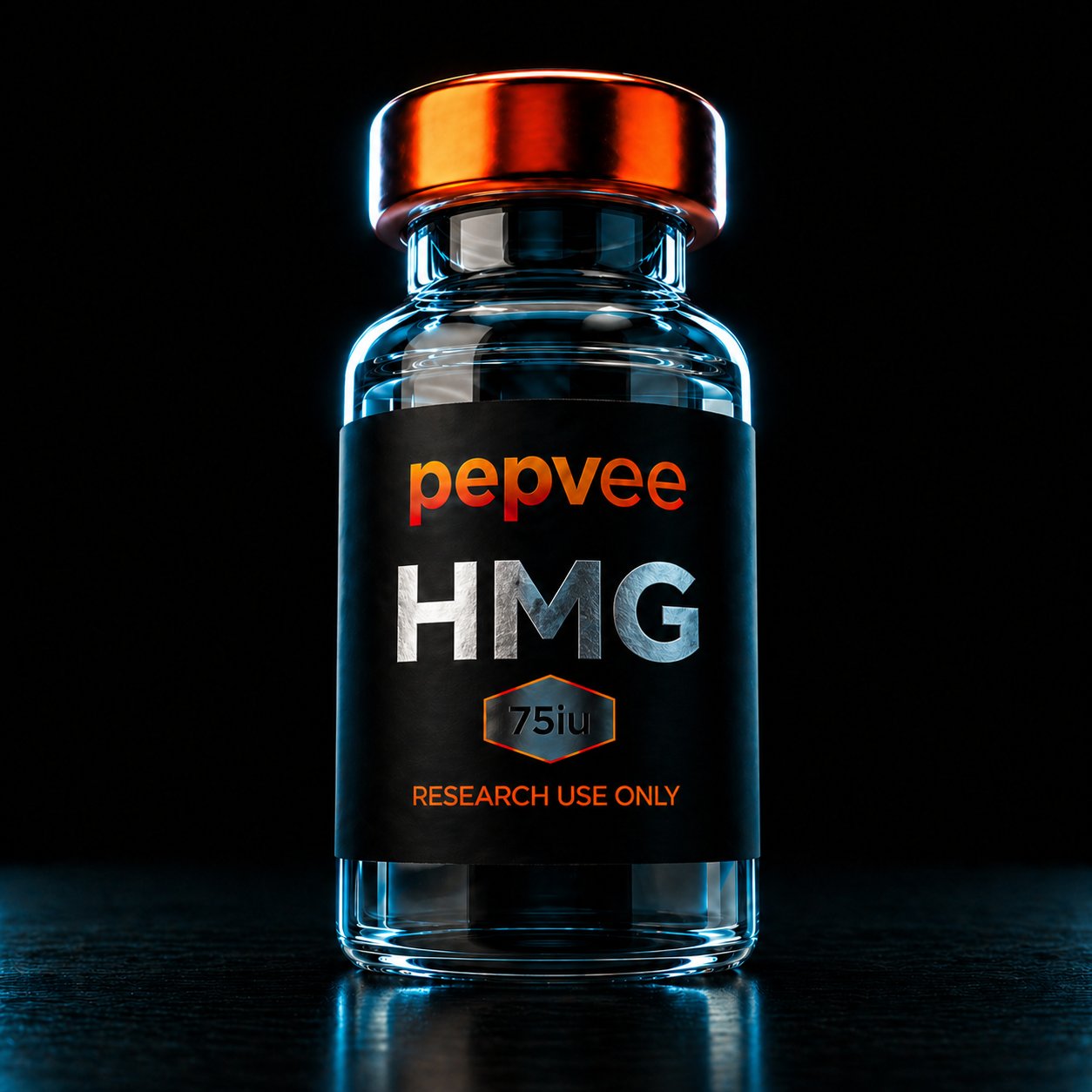
HMG
HMG is usually discussed around FSH/LH-style endocrine signaling and reproductive-axis research models. The bigger category is endocrine signaling, which means hormone messages moving between the brain, pituitary, and downstream tissues.
What that means in the body
The endocrine system works through timing, pulses, feedback, and receptor response. It is not like flipping a light switch. One signal can ask another gland or tissue to release a second signal, and the body then adjusts based on feedback.
That is the context for HMG. People usually connect it to growth-hormone-axis, reproductive-axis, or pituitary-signaling conversations depending on the specific compound.
Why people are interested in it
People are usually interested in HMG because hormone signaling sits close to recovery and sleep. It can also connect to lean-mass markers, body-composition research, and age-related endocrine questions.
The useful way to think about this category is signal quality. Readers are usually trying to understand where the compound sits in the chain. Is it upstream or downstream? Does it work through a receptor? Is the conversation about a pulse, a longer signal, or a feedback loop?
Purpose and potential benefits
For HMG, the purpose-and-benefit conversation is about how endocrine messages are started, shaped, or studied. The interest is not just a hormone name. It is the pattern of communication behind that hormone system.
Potential benefits are usually discussed as downstream themes. That can include recovery markers and sleep-quality conversations. Depending on the compound, body-composition research, IGF-1-related questions, or reproductive-axis signaling may also be relevant.
When someone is reviewing product details for HMG, pathway and timing both matter. Two products can sit in the same endocrine category while having different pulse patterns, receptor targets, or research uses.
That is why the section needs more than a short benefit phrase. Endocrine compounds often make more sense when the reader can see whether the page is talking about an upstream signal, a downstream marker, or a feedback loop.
How the pathway is usually explained
Endocrine pathways are usually explained by asking where the signal starts and what it asks the body to release. GHRH-type compounds are often described as upstream pituitary signals. Ghrelin-receptor compounds are usually discussed through secretagogue signaling. Gonadotropin-related compounds sit closer to reproductive-axis feedback.
For HMG, that pathway context matters because the name alone does not explain the research angle. The better reading is how the signal fits into the larger hormone network.
Related product
View product details, testing documents, and current availability on PepVee.
Endocrine Signaling Research
HCG
reproductive-axis signaling and gonadotropin-related research models.
KissPeptin-10
reproductive-axis signaling and gonadotropin-related research models.
2X Blend — CJC-1295 No DAC / Ipamorelin
growth-hormone releasing hormone pathway research and pulsatile-signaling models.
Hexarelin Acetate
growth-hormone secretagogue receptor research and endocrine-marker models.
GHRP-6 Acetate
growth-hormone secretagogue receptor research and endocrine-marker models.
Tesamorelin
GHRH analog research with metabolic and endocrine-marker context.