GLP-3 RT
GLP-3 RT is best understood inside the metabolic-signaling world, especially around triple-receptor metabolic signaling involving GLP-1, GIP, and glucagon-axis concepts. People usually look it up because they are trying to understand appetite signals, glucose handling, body-composition research, and how several organs communicate around energy use.
What that means in the body
Metabolic signaling is not one switch. The gut and pancreas are part of the conversation. So are the liver, brain, fat tissue, and muscle. These systems talk to each other through hormones and feedback loops.
That is why GLP-3 RT is usually discussed as a pathway topic rather than a simple outcome label. Satiety and insulin response can both be part of the same conversation. So can glucagon activity, gastric emptying, and stored-energy signaling.
Why people are interested in it
People are usually interested in GLP-3 RT because metabolic research feels connected to appetite and fullness. It also connects to glucose control, body composition, and energy balance.
The important part is that these systems work together. A change in appetite signaling can affect food intake. A change in glucose handling can affect energy storage. A change in glucagon-axis signaling can change how researchers think about stored fuel.
Purpose and potential benefits
For GLP-3 RT, the purpose-and-benefit conversation is about the larger metabolic environment. Readers are usually trying to understand whether the compound is discussed around satiety, glucose handling, energy use, or several of those signals at once.
The potential benefit people are trying to understand is not one isolated effect. It is the possibility that multiple metabolic signals may line up in a useful direction: steadier glucose handling, clearer satiety signaling, and a different conversation around stored energy.
When someone is reviewing product details for GLP-3 RT, the pathway and exact product identity matter. Similar names can sit in the same category while still pointing to different receptor combinations or research angles.
That extra context keeps the page from becoming a thin label. It gives the reader a better way to compare GLP-style, amylin-style, glucagon-axis, or fragment-based compounds without turning the article into dosing or outcome advice.
For GLP-3 RT, that extra context is what makes the page more useful. The name gives the reader a starting point, but the section only makes sense when the pathway, the body-system category, and the related product details are read together.
How the pathway is usually explained
GLP-style pathways are usually explained through receptor signaling. GLP-1 is commonly tied to satiety, insulin response, glucagon suppression, and slower gastric emptying. Other related pathways can bring in GIP, glucagon-axis, amylin, or growth-hormone-fragment conversations depending on the compound.
GLP-3 RT belongs in the question of how the body senses fuel and decides what to do with it. That is why these pages should focus on the signaling category, not on oversimplified weight-loss language.
Related products
Compare product details, testing documents, and current availability on PepVee.
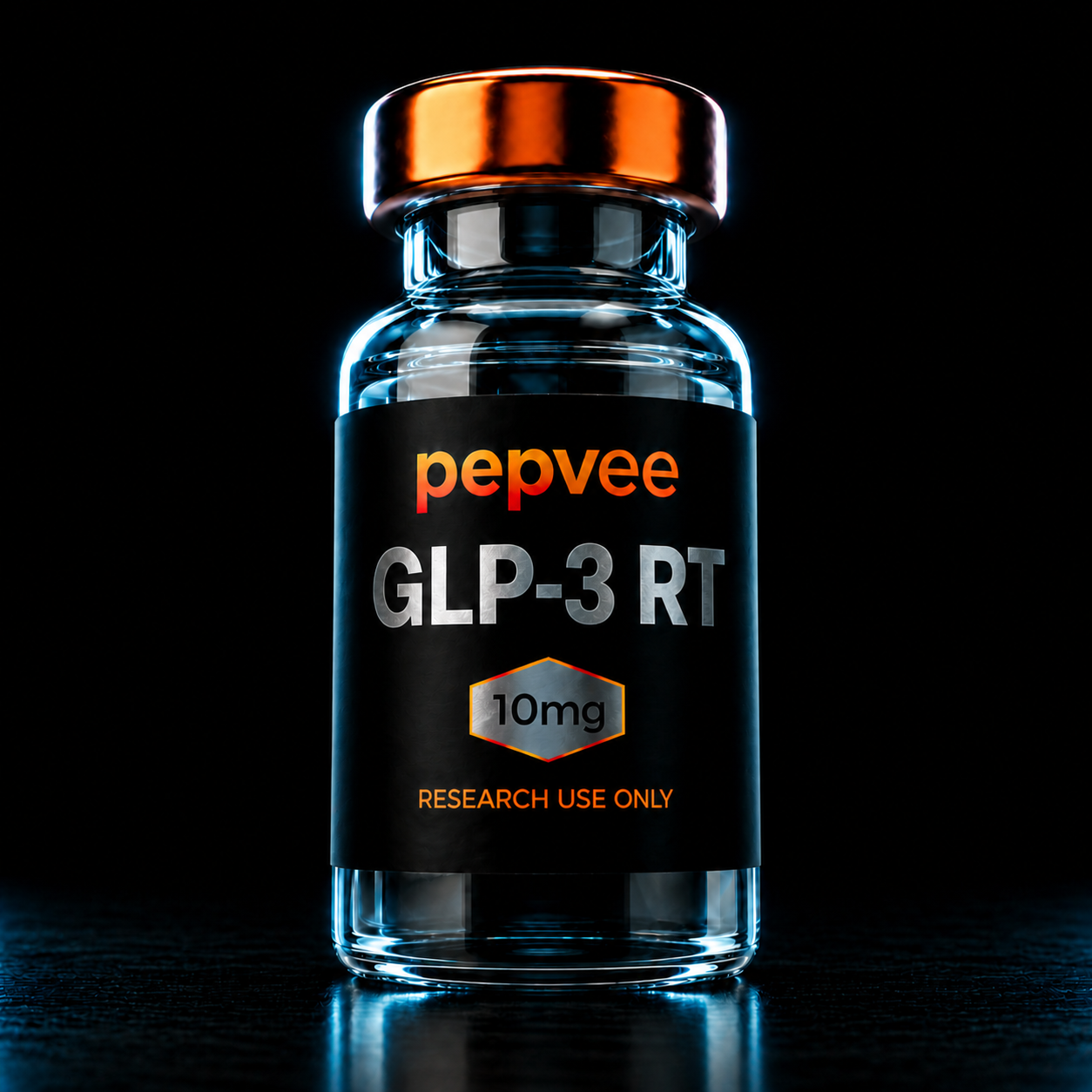
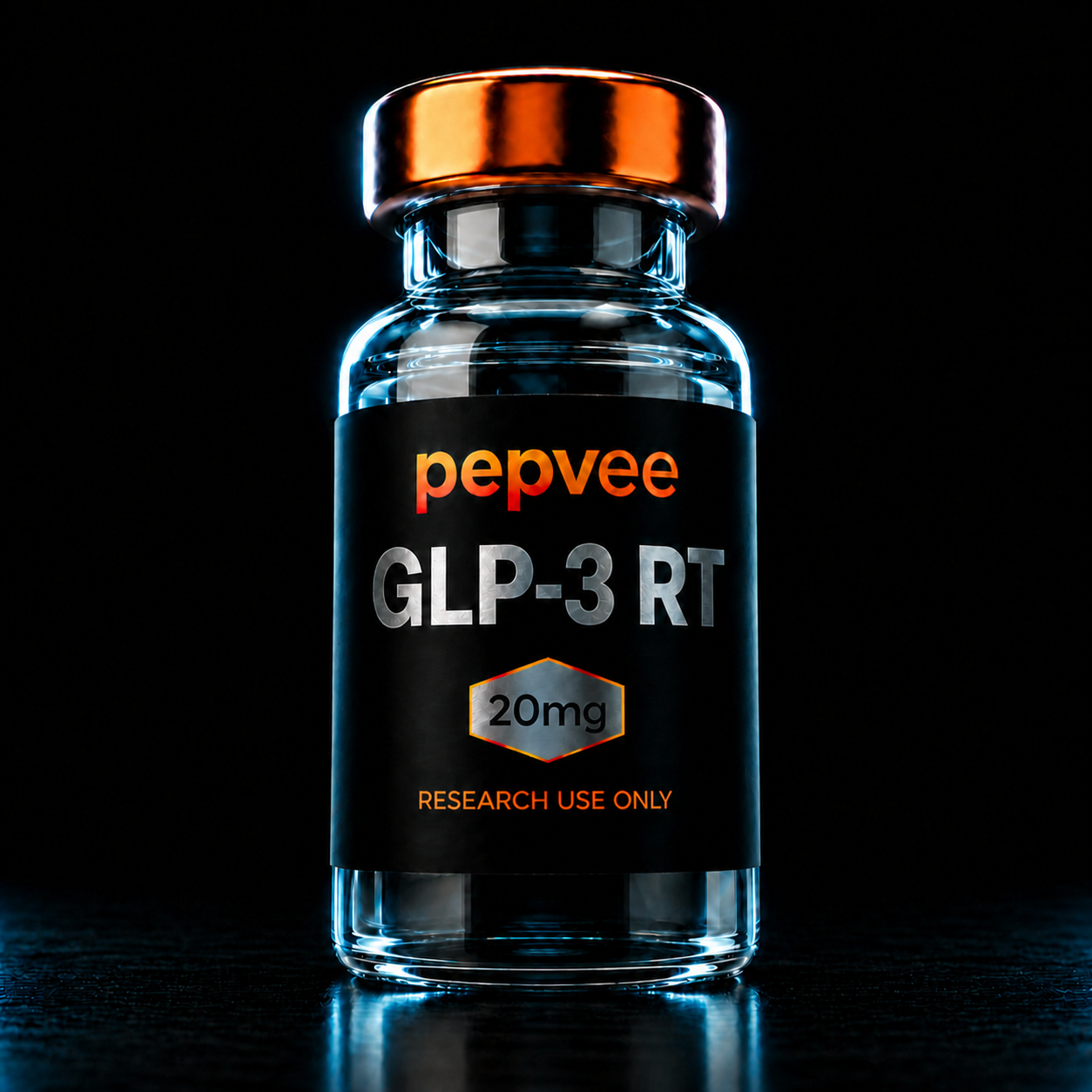
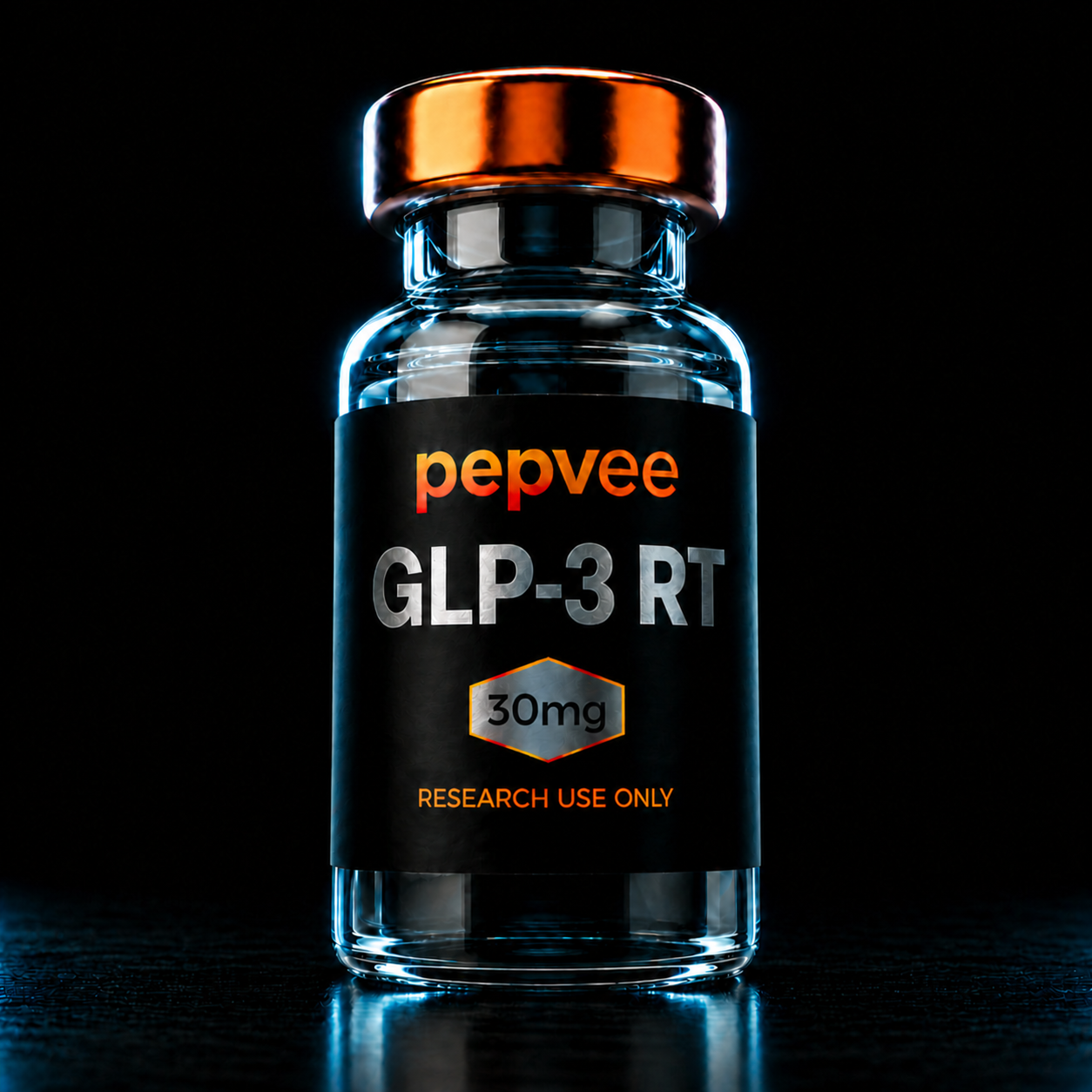
GLP / Metabolic Research
GLP-1 S
incretin-pathway signaling, metabolic-marker models, and appetite-regulation biology in controlled research settings.
GLP-2 TZ
multi-receptor incretin research, metabolic signaling, glucose-handling models, and body-composition related literature.
Cagrilintide
amylin-receptor pathway research and metabolic signaling models.
AOD-9604
fragment-based growth-hormone pathway research and metabolic-marker studies.
Survodutide
dual-pathway metabolic research involving incretin and glucagon-axis signaling.
Mazdutide
dual-pathway metabolic research involving incretin and glucagon-axis signaling.