GLOW Blend
GLOW Blend usually comes up in conversations about skin appearance, collagen support, and copper-peptide tissue conversations. Instead of reading it as a single-purpose compound, it is easier to understand it as part of the larger repair-and-barrier category. People are usually trying to understand how tissue stays organized, how irritated surfaces regain structure, and why repair biology involves more than one signal at a time.
What that means in the body
Tissue repair is not one single event. The body has to send cells into the right area, manage inflammation, organize collagen and matrix proteins, and rebuild the surface or structure that was disrupted.
That is why GLOW Blend is often discussed near skin appearance, collagen support, and copper-peptide tissue conversations. The interest is not only the name itself. It is the bigger repair environment around movement, structure, barrier function, and the signals that tell tissue when to calm down and rebuild.
Why people are interested in it
People are usually interested in GLOW Blend because this category feels practical. It connects to questions about comfort and mobility. It also connects to tissue resilience, skin or gut barriers, and recovery-style biology.
A helpful way to read these pages is to separate the pathway from the promise. Barrier support means a surface such as skin or gut lining is staying more organized. Cell migration means cells are moving where repair is needed. Matrix remodeling means the scaffold around cells is being rebuilt or reorganized.
Purpose and potential benefits
For GLOW Blend, the purpose-and-benefit conversation is mainly about resilience. Readers are usually trying to understand how soft tissue, surfaces, and support structures respond after stress or irritation.
The potential benefit people are trying to make sense of is support for the repair environment itself. That can include collagen organization, inflammatory balance, blood-flow signaling, and the way a tissue barrier regains normal function over time.
When someone is reviewing product details for GLOW Blend, the pathway should come first. The better question is not simply what it is called, but what system it is connected to, what outcome themes people associate with it, and what testing or product information supports the listing.
That extra context matters because tissue-related peptides can sound similar on the surface. Slowing the explanation down makes it easier to understand why one peptide is connected to barrier integrity, another to cell movement, and another to collagen or matrix signaling.
How the pathway is usually explained
This pathway is usually explained through tissue-signaling language. Fibroblast behavior and collagen organization describe two pieces of the repair process. Inflammatory balance is another piece. Blood-vessel signaling and extracellular-matrix remodeling can also be part of that same larger process.
GLOW Blend belongs in the conversation about how the body coordinates repair. It is not a magic switch. It is a way to look at the signals that help tissue move from irritation or disruption back toward structure and stability.
Related product
View product details, testing documents, and current availability on PepVee.
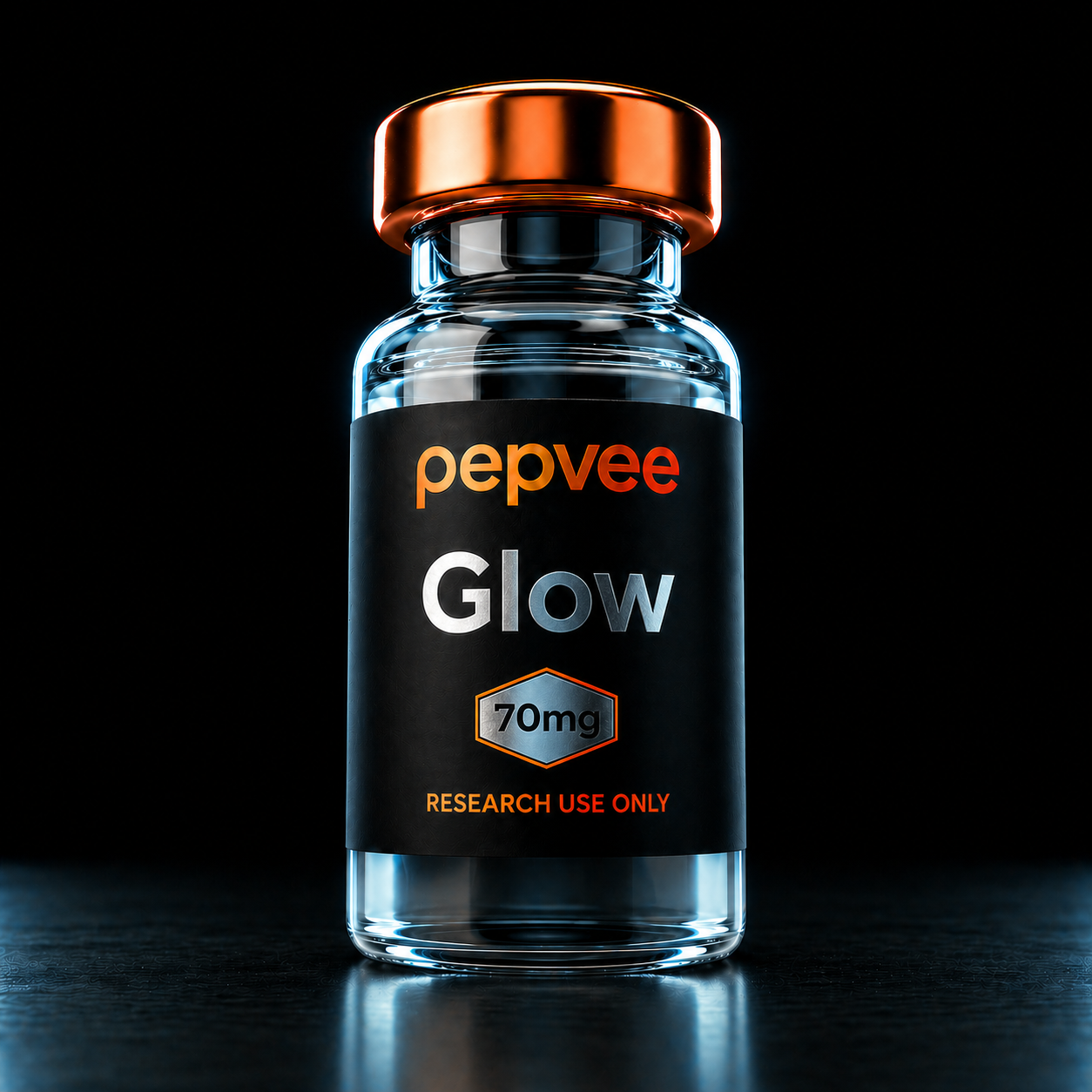
Tissue / Barrier / Recovery Research
GHK-Cu
copper-peptide research involving skin models, extracellular matrix markers, and wound-repair signaling.
KLOW Blend
combined copper-peptide, barrier, and tissue-repair marker research.
Wolverine Blend — BPC-157 / TB-500
tissue, tendon, gut-barrier, and repair-signaling literature in preclinical research.
ARA-290 / Cibinetide
erythropoietin-receptor related tissue-protection and inflammatory-marker research.
LL-37 / Cathelicidin
cathelicidin antimicrobial peptide research and innate immune signaling.
KPV / Lysine-Proline-Valine
barrier-function, inflammatory-marker, and immune-signaling research.