AICAR / Acadesine
AICAR / Acadesine is usually discussed around AMPK activation, endurance-style pathways, and cellular fuel sensing. This category is about how cells make energy, handle stress, recycle key molecules, and stay flexible when demand changes.
What that means in the body
Every cell has to turn fuel into usable energy. Mitochondria do much of that work, while redox systems help manage the electron flow and oxidative byproducts that come with energy production.
That is why AICAR / Acadesine is often discussed beyond simple “energy” language. The real conversation is about cellular efficiency, mitochondrial resilience, oxidative-stress balance, and how tissues keep functioning under demand.
Why people are interested in it
People are usually interested in AICAR / Acadesine because cellular-energy research connects to fatigue conversations and stamina. It also connects to recovery, metabolic flexibility, aging biology, and general resilience.
This category can sound technical, but the reader question is simple: how do cells keep producing energy without falling behind on cleanup, repair, and stress management?
Purpose and potential benefits
For AICAR / Acadesine, the purpose-and-benefit conversation is about the cell’s energy environment. Readers are usually trying to understand mitochondrial function, nutrient handling, oxidative balance, and the systems that keep energy production steady.
The potential benefit people are trying to understand is not a stimulant effect. It is a deeper cellular-support idea: better fuel sensing, cleaner redox balance, stronger mitochondrial signaling, or more efficient handling of metabolic stress.
When someone is reviewing product details for AICAR / Acadesine, the mechanism matters more than the energy label. Similar-sounding products may point to different parts of the cell’s workload, so the useful question is what the compound is actually connected to.
That context keeps the article grounded. It explains why one compound may be discussed around redox balance, another around AMPK signaling, another around mitochondrial membranes, and another around nutrient handling.
How the pathway is usually explained
Common pathway terms in this category include NAD+/NADH cycling and AMPK signaling. Mitochondrial membrane potential and oxidative-stress response may also come up. Some pages focus more on fatty-acid transport, glutathione recycling, or enzyme regulation.
In reader language, AICAR / Acadesine belongs in the conversation about cellular workload. The body is not only making energy; it is also managing the stress and byproducts that come with making that energy.
Related product
View product details, testing documents, and current availability on PepVee.
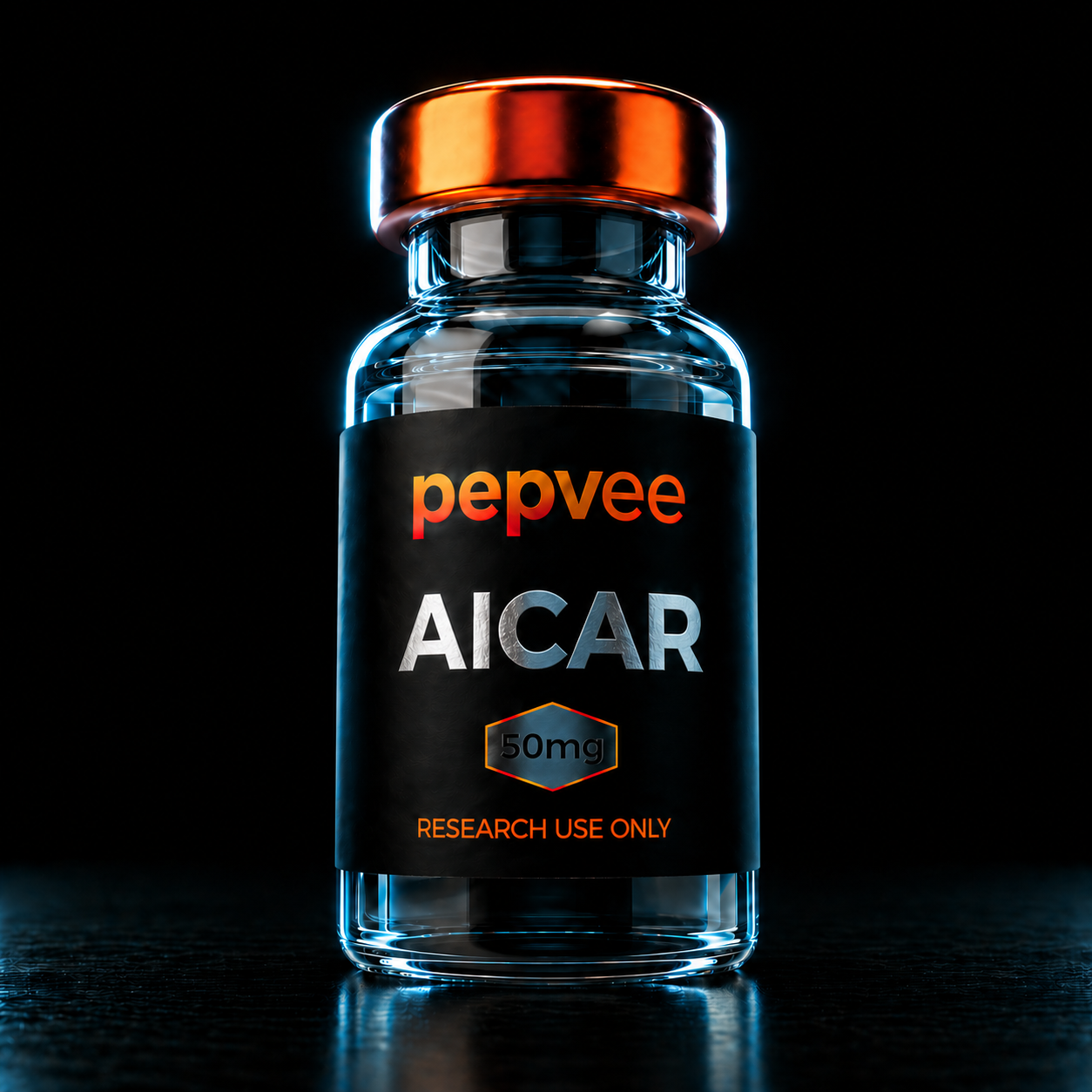
Cellular Energy / Redox Research
Glutathione
oxidative-stress, redox balance, and antioxidant-system research.
SLU-PP-332
AMPK, exercise-mimetic, NNMT, or metabolic enzyme pathway research.
5-amino-1MQ
AMPK, exercise-mimetic, NNMT, or metabolic enzyme pathway research.
SS-31 / Elamipretide
mitochondrial peptide research, cardiolipin-associated models, and cellular stress markers.
MOTS-c
mitochondrial signaling, metabolic adaptation, and cellular stress-response research.
NAD+
redox biology, cellular-energy markers, and longevity-related research context.